
Samhain: Darkness Isn’t Simply an Absence of Light
October 29, 2026
Embracing the wisdom of the darker half of the year, and learning to see our lives differently as the seasons turn.
As we reach the final days of October, there is a noticeable shift taking place in the natural world, as the last of the autumn leaves fall from the trees, the mornings become increasingly crisp, the evenings draw in and the landscape begins to take on a quieter, more contemplative quality. Although we have been moving through autumn for several weeks now, there is something about this point in the season that feels like a deeper turning, a transition away from the brighter, more outward-facing energy of early autumn and towards the stillness, reflection and introspection of the darker months ahead.
This is the time of Samhain, traditionally observed around 31 October, marking the end of the harvest season and the beginning of winter in the Celtic seasonal calendar. It is one of the significant celebrations within the Wheel of the Year, representing the turning from light into darkness, from the visible abundance of the growing season into a period of retreat, reflection and renewal, and from the outward movement of summer towards the quieter, more inward-facing energy of winter.
There is something quite beautiful about this particular point in the seasonal cycle, especially when we allow ourselves to look beyond the modern associations of Halloween and reconnect with the deeper meaning and traditions of Samhain. It is a celebration rooted in the understanding that life moves through continuous cycles of beginnings and endings, growth and decay, life and death, and that each phase has its own purpose and wisdom to offer.
And perhaps one of the most important things this turning of the wheel reminds us of is that darkness isn’t simply an absence of light. It gives us different conditions in which to see.
We live in a world that places an enormous amount of emphasis on light, growth, visibility and forward movement, where being productive, having clarity, making progress and knowing where we are going are often treated as signs that we are doing life well. We are encouraged to keep moving, to find the answers, to make the most of every opportunity and to continually work towards becoming a better version of ourselves, as though there is something inherently wrong with the periods when life feels quieter, less certain or less outwardly productive.
Yet nature tells a very different story.
As the days shorten and the landscape begins to retreat into the darkness of winter, the natural world isn’t failing to thrive simply because we can no longer see the same signs of growth. Much of what sustains life is happening beneath the surface, away from our immediate view, in the roots, the soil and the quiet processes that prepare the ground for what will eventually emerge.
The light hasn’t disappeared forever, and life hasn’t come to an end; we have simply entered a different part of the cycle, one that asks something different of us.
Perhaps this is the invitation of Samhain: to stop treating darkness as something we need to overcome, and begin recognising what it might allow us to see that the brightness of the other seasons sometimes obscures.
The turning of the wheel: Welcoming the darker half of the year
Samhain marks a threshold between seasons, a point in the year when the natural world has largely completed its harvest and begins moving towards the stillness of winter. Traditionally associated with remembrance, the ancestors, endings and the cyclical nature of life, it offers an opportunity to acknowledge the transition taking place around us and within us, rather than rushing straight through it in anticipation of what comes next.
As we watch the leaves fall from the trees, there is a visible reminder that letting go is an essential part of life, not an indication that something has gone wrong. The trees don’t hold on to their leaves simply because they once provided nourishment, nor do they attempt to maintain the same outward appearance throughout the year. Instead, they respond to the changing conditions, releasing what is no longer needed and conserving their energy for the season ahead.
There is a quiet wisdom in this process, because we often find ourselves doing the opposite in our own lives, holding on to habits, expectations, responsibilities and versions of ourselves long after they have stopped supporting us, perhaps because we are afraid of what it might mean to let them go or because we have become so accustomed to a particular way of living that we struggle to imagine what might take its place.
We can become attached to the idea that progress should always look like expansion, that we should continually be adding new experiences, developing new skills, pursuing new goals and moving towards something more, without considering whether what we are building still feels right for the person we are becoming.
Samhain invites us to reconsider this relationship with growth, reminding us that there are times when the most meaningful thing we can do is acknowledge what has reached its natural conclusion, make peace with what has changed and allow ourselves to release the things we no longer need to carry.
This doesn’t have to mean making dramatic changes or deciding that everything in your life needs to be different. Sometimes it is simply recognising that an old expectation no longer fits, that a commitment is taking more from you than you have capacity to give, or that you have outgrown a way of thinking about yourself that once helped you make sense of the world.
As we move towards winter, perhaps we can allow ourselves to be a little more curious about what is ready to fall away, trusting that we don’t have to immediately replace everything we release with something new.
Sometimes the space itself is important.
Darkness offers a different perspective
Think about how differently we experience the world when the light changes.
In the brightness of a summer afternoon, we can see the landscape in all its detail, the colours of the flowers, the shape of the trees, the paths stretching ahead of us and the possibilities that seem to open up in every direction. Our attention is naturally drawn outwards, towards what is happening around us, what we can explore and what we might want to do next.
But as the light fades, our experience of the same landscape begins to change. The familiar details become less distinct, the boundaries between things soften and we become more aware of what we can hear, feel and sense rather than simply what we can see. We might notice the sound of the wind moving through the trees, the coolness of the air against our skin or the feeling of our feet making contact with the ground beneath us.
The landscape hasn’t necessarily changed, but the conditions through which we experience it have.
I think there is something quite profound in this when we consider our own lives, because we often assume that clarity comes from having more information, more options, more certainty and a clearer view of the road ahead. We can spend so much time trying to illuminate every possible outcome, understand every detail and work out exactly where we are going that we overlook the ways in which our perspective might change if we stopped trying to see everything so clearly.
Sometimes, when the light is too bright, we become focused on what is directly in front of us, on the visible evidence of progress, the milestones we are trying to reach and the expectations we are attempting to meet. We can become so absorbed in what we think we should be doing that we lose touch with the quieter feelings and instincts that might be telling us something important about how we actually want to live.
Darkness invites a different kind of attention.
When we are no longer relying quite so heavily on what is immediately visible, we may begin to notice what has been present all along but has struggled to find our attention amongst the noise of everyday life. We might recognise the exhaustion we have been pushing through, the longing we have been too busy to acknowledge, the relationships that need more care or the parts of ourselves that have been waiting for us to slow down enough to listen.
We might also begin to see that some of the things we have been working so hard towards no longer hold the same meaning they once did, while other things that appeared insignificant have quietly become essential to our sense of wellbeing and fulfilment.
This is not because darkness automatically gives us all the answers, but because changing our conditions can change what we are able to notice.
Perhaps we don’t always need more light, more information or a clearer plan. Perhaps sometimes we need to step away from the things that have been demanding our attention so that we can begin to recognise what has been quietly asking for it.
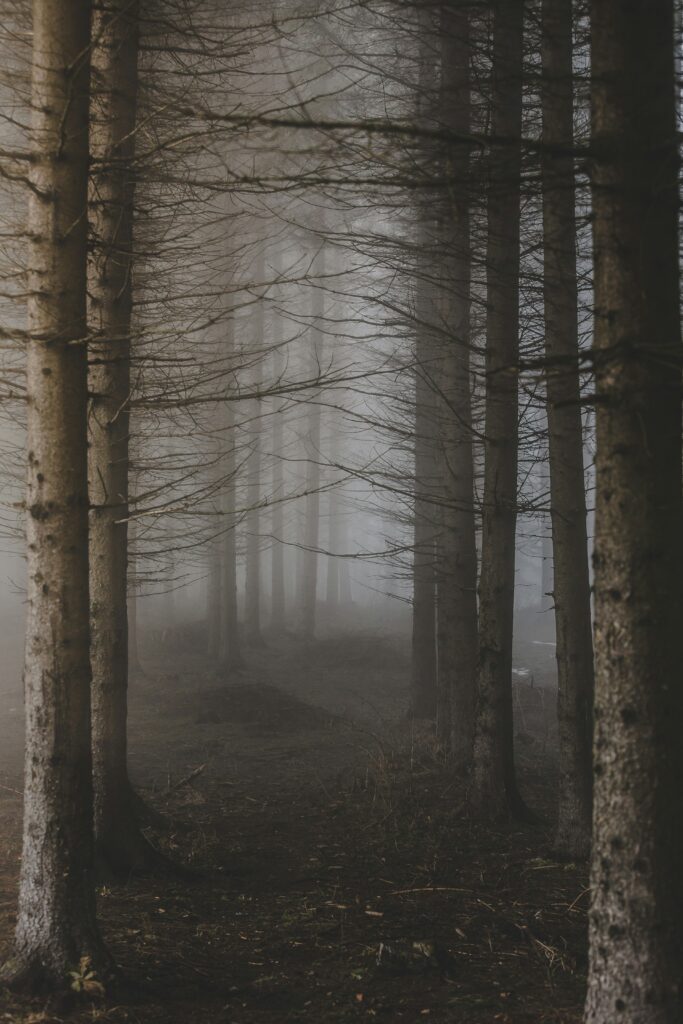
The beauty of the unseen
One of the things I find most fascinating about the natural world at this time of year is the reminder that so much of life happens beyond what we can immediately observe.
As the landscape becomes quieter and the visible signs of growth begin to disappear, there is still an incredible amount taking place beneath the surface. Roots continue to support the plants they belong to, organic matter returns to the soil, seeds remain protected as they wait for more favourable conditions, and the earth moves through the processes that make future growth possible.
We might look at a garden in the depths of winter and assume that very little is happening, because there are fewer flowers, fewer leaves and fewer obvious signs of life, yet the absence of visible growth doesn’t mean the absence of life itself.
The same is true of our own personal growth, although we can find this much harder to accept when we have become accustomed to measuring our progress through visible results.
We often want to see evidence that we are moving forwards, whether that means achieving a goal, developing a new skill, making a change or reaching a point where we can look back and say that all our efforts have amounted to something. When those signs are missing, it can be easy to assume that we are standing still, wasting time or somehow falling behind.
But some of the most significant changes in our lives take place quietly, long before we have anything tangible to show for them.
There are periods when we are processing what we have experienced, questioning what we once believed, learning to recognise our own needs or gradually developing the confidence to make different choices. There are times when we need to rest, recover, rebuild our foundations or simply allow ourselves to be in a place of uncertainty while we work out what feels right.
These periods may not look particularly productive from the outside, and they may not even feel productive to us while we are moving through them, but they can be essential to the person we are becoming and the life we are creating.
I know how easy it is to want to rush through these quieter phases, particularly when we have an idea of where we want to be and can see the distance between our present circumstances and the future we imagine. We want to get to the point where things make sense, where we feel confident in our decisions and where the effort we have been putting in begins to translate into something we can see and measure.
Yet nature reminds us that there is a time for visible growth and a time for tending to what happens beneath the surface, and that neither phase is more important than the other.
We don’t need to be constantly producing something, proving something or demonstrating our progress to justify the time we are taking.
Sometimes the work is happening in ways we cannot yet see.
The wisdom of endings and the courage to let go
Samhain is traditionally associated with the cycle of death and rebirth, and although this can be understood through its spiritual and ancestral traditions, it also offers a powerful way of thinking about the endings we experience throughout our everyday lives.
Not every ending arrives with a clear moment of closure, and not every transition involves something dramatic happening. Sometimes an ending is a gradual realisation that a particular way of living no longer feels right, that an old ambition no longer reflects what matters to us or that we are no longer willing to continue meeting expectations that come at the expense of our own wellbeing.
There can be grief in these realisations, even when we know that change is necessary, because letting go often means acknowledging that something we once wanted, believed in or worked towards no longer belongs in the same way.
We might have to reconsider the identity we have built around being capable, productive, reliable or endlessly available to others, particularly if those qualities have become so deeply ingrained that we struggle to recognise where our own needs fit into the picture.
We might have to make peace with the fact that the life we imagined for ourselves has changed, or that the version of success we once pursued no longer feels as meaningful as it did before.
And sometimes we simply have to acknowledge that a chapter has ended, even when we would have preferred it to continue.
There is no need to romanticise these experiences or pretend that letting go is always easy, because endings can be painful, disorientating and filled with uncertainty. But we can begin to recognise that an ending doesn’t have to be a failure, and that releasing something doesn’t mean it was never valuable or that we have somehow wasted the time we spent with it.
Something can have been right for us once and no longer be right for us now.
A particular ambition can have taught us a great deal, even if we eventually choose a different direction. A relationship can have shaped us in meaningful ways, even if it is no longer part of our lives. A period of striving can have helped us develop skills and resilience, even if we later realise that we want to live at a different pace.
The invitation of Samhain is not to reject the past, but to honour it without feeling that we must carry every part of it forwards.
As the leaves return to the earth, they become part of the conditions that nourish future growth. In the same way, we can allow our experiences to become part of the wisdom we carry, taking what we have learned while releasing the need to remain attached to everything that has come before.
Remembering our roots and honouring the past
Another important theme of Samhain is remembrance, particularly the tradition of honouring ancestors and those who have passed away.
In Celtic seasonal traditions, Samhain was associated with the belief that the boundary between the worlds of the living and the dead became thinner at this time of year, creating an opportunity to remember and honour those who had come before. Although traditions and interpretations have varied across time and place, remembrance remains an important part of many contemporary Samhain celebrations.
There is something meaningful about dedicating time to the people, relationships and histories that have shaped our lives, particularly in a culture that often encourages us to keep looking forwards rather than pausing to acknowledge where we have come from.
Our lives are not separate from the stories that preceded them. We carry the influence of the people who raised us, the communities we have belonged to, the experiences that shaped our understanding of the world and the traditions that have been passed down through generations, whether we are consciously aware of those influences or not.
Taking time to reflect on our roots can help us recognise the experiences and values we want to carry forward, as well as the patterns we may wish to understand differently or choose not to repeat.
We can honour the people who came before us without needing to idealise their lives or assume that everything they passed down was right for us. We can acknowledge the love, resilience, knowledge and care that helped shape our lives, while also recognising that part of our own journey may involve questioning old expectations and creating new ways of living.
Remembrance can also extend to our own past selves, to the people we once were and the versions of ourselves we have had to leave behind as life has unfolded.
Perhaps there are parts of your story that deserve more compassion than you have given them, experiences you have been too quick to dismiss or periods of your life that you judge harshly because you now understand things differently.
Samhain offers an opportunity to look back with a little more tenderness, recognising that every version of you was living with the understanding, resources and circumstances available at the time.
You don’t have to remain the person you once were, but you can honour the journey that brought you here.
Learning to live with the unknown
As we enter the darker half of the year, we are also reminded that not everything needs to be illuminated, understood or resolved immediately.
In many ways, this is one of the more challenging invitations of the season, because uncertainty can make us uncomfortable, particularly when we are used to approaching life through planning, problem-solving and finding practical ways to move towards the outcomes we want.
There is nothing wrong with wanting clarity or taking responsibility for the direction of our lives, but sometimes our desire to know exactly what comes next can become a way of trying to protect ourselves from the discomfort of not knowing.
We want to make the right decision, choose the right path and feel confident that the effort we are putting into something will lead us somewhere worthwhile. We want reassurance that the changes we are making will work out, that the things we are releasing will be replaced by something better and that the uncertainty we are experiencing is simply a temporary stage on the way to a more settled future.
But life doesn’t always offer us that kind of certainty, and there are times when we have to make decisions, explore possibilities or allow things to unfold without knowing precisely where they will lead.
The darker half of the year offers an opportunity to practise being with this uncertainty rather than immediately trying to resolve it, recognising that not every question needs an answer today and not every new possibility needs to become a plan.
We can allow ourselves to sit with what we don’t yet understand, giving our thoughts and feelings time to settle and allowing our perspective to develop through experience rather than demanding that we have everything figured out in advance.
This can be particularly valuable during periods of transition, when we know that something is changing but haven’t yet worked out what the next chapter will look like.
Instead of interpreting this in-between space as evidence that we are lost or falling behind, we can begin to see it as a legitimate part of the process, a time when we are gathering information, making sense of our experiences and allowing new possibilities to take shape.
We don’t have to force a new beginning simply because an old chapter has ended.
We can let ourselves be in the darkness for a while, trusting that a different perspective may emerge when we stop trying so hard to make everything visible.
Finding your ground as the season deepens
Although Samhain invites us towards reflection and introspection, this doesn’t mean we need to retreat entirely from everyday life or spend the coming months in a state of constant contemplation.
Grounding is just as important during this season, particularly as the darker evenings and colder weather begin to change the rhythm of our days and we naturally spend more time indoors.
Sometimes, when we are going through a period of change or uncertainty, it is the simplest things that help us feel most supported, whether that is getting outside during daylight hours, preparing a nourishing meal, moving our bodies in a way that feels good, creating a comfortable home environment or maintaining a few familiar rituals throughout the week.
These everyday practices may not appear particularly significant, but they can help us remain connected to the present while we are processing what has happened in the past or considering what might come next.
There is also something grounding about spending time in the natural world at this point in the year, allowing yourself to experience autumn as it actually is rather than simply viewing it as a countdown to winter. Notice the changing colours, the damp earth beneath your feet, the sounds of birds moving through the trees and the subtle differences in the quality of the light as the days grow shorter.
Nature doesn’t need to be spectacular to be restorative, and we don’t need to turn every walk into a practice or every quiet moment into an opportunity for personal growth. Sometimes it is enough to step outside, pay attention to our surroundings and allow ourselves to be part of the season we are living in.
This is also a good time to consider whether the way you are organising your life reflects the conditions you are actually living in, particularly if you have continued to carry the same pace and expectations from the brighter months into autumn.
Rather than expecting yourself to operate at the same capacity all year round, consider where you might benefit from more space, more support or a gentler approach to your commitments, creating a rhythm that allows for both meaningful activity and the restoration that makes it sustainable.
Grounding is not about making life perfectly calm or predictable; it is about developing ways of returning to yourself when life feels uncertain, remembering that you can create moments of steadiness even when you cannot control everything that is happening around you.
Embracing the darkness without rushing towards the light
Perhaps one of the most important things we can take from Samhain is the understanding that darkness is not something we have to hurry through.
We often talk about difficult periods of life as though they are places we need to escape from as quickly as possible, describing them as dark times that we hope to leave behind once we have found our way back into the light. While there is nothing wrong with wanting to feel better, find clarity or move towards a more hopeful chapter, this way of thinking can sometimes lead us to overlook what a particular season might have to teach us.
We become so focused on getting through the difficult part that we forget to pay attention to what is happening while we are there.
But darkness can offer its own kind of clarity, not necessarily by providing immediate answers, but by changing what we pay attention to and helping us recognise things that have been difficult to see in the brightness of our everyday routines.
It can reveal where we have been pushing ourselves beyond our capacity, where we have become disconnected from our own needs or where we have been following a path simply because it is familiar. It can bring our attention to the relationships, rituals and ordinary moments that sustain us, and help us recognise which parts of our lives feel meaningful when we remove the pressure to constantly achieve more.
It can also give us the space to grieve, to remember, to rest and to come to terms with changes that we may not have fully acknowledged while we were busy keeping everything moving.
None of this means that every difficult experience has a hidden lesson or that we need to find a positive meaning in everything that happens. Sometimes life is simply difficult, and what we need most is time, care and support rather than another reason to turn our experiences into personal development.
But we can still recognise that the darker parts of life are not automatically empty of value, and that we don’t have to judge ourselves for being in a season that asks something different of us.
Just as the earth needs its quieter months, we need periods when we can turn our attention inwards, process what we have experienced and allow ourselves to exist without the constant demand to be growing, improving or moving forwards.
The light will return, as it always does, but we don’t need to wait for it before we begin living meaningfully in the season we are in.
Working with the energy of Samhain
As we approach Samhain and the turning towards winter, you might like to create a little space for reflection, release and reconnection, allowing the themes of this celebration to inform the way you move through the final weeks of autumn.
Rather than creating a long list of things you want to achieve before the end of the year, consider what would help you feel more grounded and supported as the seasons change, and where you might benefit from simplifying your life or releasing expectations that no longer feel helpful.
You might choose to mark Samhain with a simple ritual, lighting a candle, reflecting on the people and experiences you want to honour, or writing down the things you are ready to leave behind. You could spend time looking through old photographs, exploring your family history or simply taking a quiet walk and allowing yourself to reflect on the year so far.
You might also consider how you want to experience the darker months ahead, thinking less about what you want to accomplish and more about how you want to feel, what you want to nurture and what you want to make room for in your everyday life.
Some questions to explore in your journal:
- What has this year revealed about the way I want to live, and what feels different about my priorities now?
- What am I holding on to because it feels familiar, even though it may no longer be right for me?
- What parts of my life have I been too busy to notice, acknowledge or give the attention they deserve?
- Where might I be mistaking a quieter period for a lack of progress?
- What people, experiences and traditions help me feel connected to my roots?
- What do I need to acknowledge or make peace with before I move into the next chapter?
- How might my perspective change if I stopped trying to find immediate answers and allowed myself more time to listen?
- What would it look like to make the darker half of the year a season of nourishment, reflection and intentional living, rather than something I simply need to get through?
You don’t need to answer all of these questions at once, and you don’t need to turn your reflections into immediate action. Allow yourself to be curious about what emerges, trusting that the purpose of this season is not necessarily to find a clear path forwards, but to create the conditions in which you can begin to see your life differently.
As the wheel turns towards Samhain and the darker half of the year, I hope we can begin to see this season as more than a period of diminishing light, colder weather and shorter days that we must somehow get through before spring arrives.
There is so much to be found in the quieter parts of the cycle, in the opportunities to reflect, remember, release and reconnect with ourselves, and in the understanding that not every phase of life is meant to look the same.
We don’t need to be constantly growing, achieving or becoming something more, and we don’t need to have a clear view of the future in order to trust ourselves with the present. Sometimes the most valuable thing we can do is recognise that the conditions have changed and allow ourselves to respond accordingly.
Darkness isn’t simply an absence of light, but an invitation to see differently, to listen more closely and to notice what might otherwise remain hidden beneath the noise and brightness of our everyday lives. It’s an opportunity to discover that clarity doesn’t always come from illuminating every possible path, but sometimes from allowing ourselves to step away from the things that have been distracting us, giving our attention to what matters and trusting that we can navigate the next part of our journey one step at a time.
And perhaps, as the leaves fall and the landscape settles into its quieter season, we can remember that there is life beneath the surface, even when we cannot see it, and that we are allowed to enter our own periods of stillness without needing to justify them or rush towards what comes next.
The light will return, but for now, we can allow ourselves to honour the darkness, learn from what it reveals and find beauty in the season we are living.
Because there is wisdom in the dark, too.
xo Emily

...then live in it
The membership where Lifestyle Planning Meets Wellness + Nervous System Support
SEASONal SOUL inner circle
BUILD
YOUR SEASONAL WORLD
Your ongoing space for living in rhythm with the seasons, cycles and energy of now. Seasonal Soul Membership is designed to help you **embody your seasonal rhythm**, rather than simply learn about it.
Be the first to comment