
You can live a normal, messy, imperfect life and still live cyclically
October 15, 2026
It can be easy, reading about an ethos or system that’s new and different, to think, “That sounds great, but it wouldn’t work for me…”
To understand the process but not be able to see how that translates into your own life and daily routine, especially when your days are already full, your responsibilities are many, and the idea of introducing something else into the mix feels more like another thing to get right than something that might actually make life easier.
But I’m here to tell you that no matter how messy, busy or imperfect you think your life is, this cyclical and intentional approach to life and planning CAN work for you.
In fact, it was built for humans exactly like you!
No two lives look the same, none of us experience the world in exactly the same way, so why should the way we plan our lives look the same, either?
There are many barriers that get in the way of us making changes, and change, any kind of change no matter how small, can be scary and feel overwhelming, especially when it comes to our routines and daily lives and the things that we do repeatedly, day in, day out. These things become so ingrained that they begin to feel like part of ourselves, part of our personality and identity, part of our very being.
When our nervous systems perceive change as a threat, making adjustments to the things that feel like an ingrained part of us can feel especially hard, and we come up with all kinds of reasons, excuses and barriers to keep ourselves safe in the familiarity of what we know.
But what we know isn’t always the thing that’s best for us or our health and wellbeing.
The beauty of this cyclical and intentional approach is that it was built to be a system that adapts to align with and support your life, rather than expecting you to change your life to fit the system. It uses the patterns of the seasons, the changing rhythms of nature, the moon and astrology as tools for understanding yourself, your energy and your needs, helping you create a way of living and planning that feels more supportive, sustainable and aligned with the life you actually have.
And that includes the messy bits, the unexpected changes, the weeks when everything goes to plan and the ones when absolutely nothing does.
Because you don’t need to have a perfect life to live cyclically.
You don’t need to have your life together first
I think one of the biggest misconceptions about intentional and cyclical living is that you need to reach a certain point in your life before you can begin.
Perhaps you imagine a woman who wakes up early, meditates before sunrise, spends her mornings journalling with a cup of herbal tea, eats perfectly balanced meals, takes long walks in nature, and somehow manages to organise her entire life around the changing seasons and the phases of the moon, all while maintaining a beautifully calm nervous system and a tidy home.
And perhaps you look at your own life, with its overflowing to-do list, laundry that needs putting away, work commitments, family responsibilities, appointments, unexpected interruptions and the general chaos of being a human being, and think that this way of living simply isn’t realistic for you.
But that image of perfectly curated cyclical living misses the point entirely.
Living cyclically isn’t about creating a beautiful routine that you must follow religiously, nor is it about adding a dozen new rituals to an already full day. It’s about learning to recognise that life has rhythms, that your energy and capacity change, that nature moves through periods of growth and rest, and that you can begin working with these patterns rather than constantly pushing against them.
You can live cyclically when you have five minutes to yourself rather than an entire morning to dedicate to your wellbeing. You can live cyclically when your plans change unexpectedly, when you’re tired, when you’re overwhelmed, when you’re navigating a difficult period or when you’re simply doing your best to get through the week.
You can live cyclically without ever having a perfectly organised home, a consistent morning routine or a planner in which every page has been completed.
You can even live cyclically when you forget to check the moon phase, don’t know which seasonal festival is approaching and haven’t done a single autumn ritual.
Because the heart of this approach isn’t about doing everything right; it’s about becoming more aware of yourself and your life, and learning to respond to what you notice with a little more intention, compassion and understanding.
Why change can feel harder than it should
Have you ever noticed how easy it can be to recognise that something in your life isn’t working, yet find yourself struggling to do anything differently?
Perhaps you know you need more rest, but you keep filling your evenings with tasks because sitting down feels uncomfortable when there’s still so much to do. Maybe you want to spend more time outdoors, but you find yourself moving from one obligation to the next until the daylight has disappeared. Or perhaps you long for a slower, more intentional way of living, yet the moment you try to change your routine, you feel overwhelmed by all the things you think you should be doing.
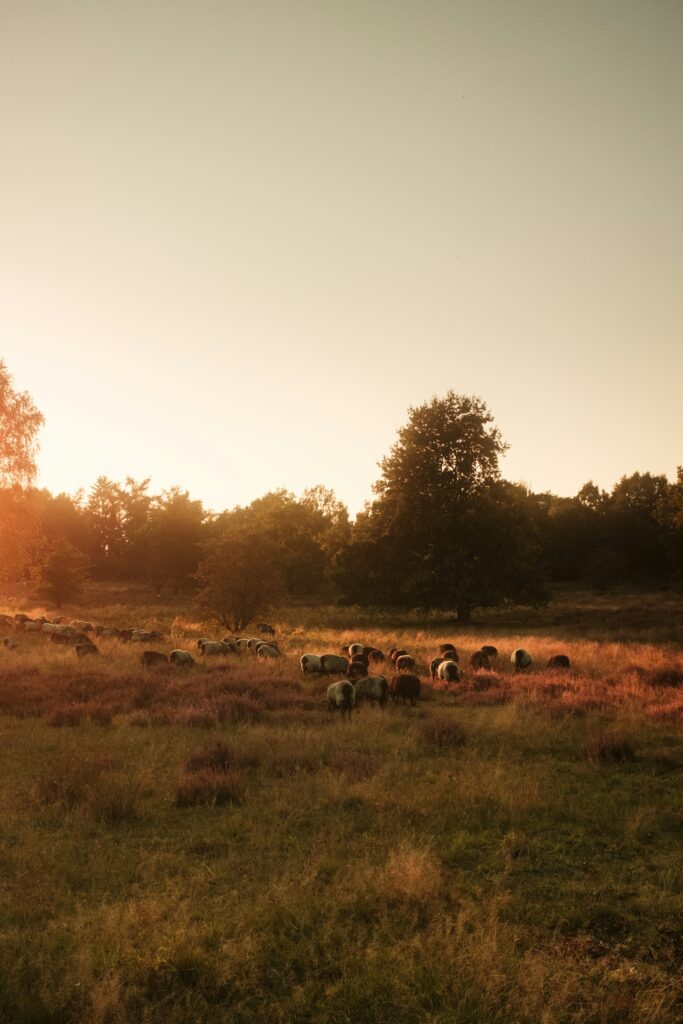
This doesn’t necessarily mean you’re lazy, undisciplined or incapable of creating change. Often, our familiar routines provide a sense of predictability, and predictability can feel reassuring when life already asks so much of us.
Even habits that leave us exhausted can feel safer than unfamiliar alternatives simply because we know what to expect from them.
When we’re already stretched thin, the idea of changing our approach to planning, introducing new habits or questioning the way we’ve always done things can feel like one more demand on our time and energy. We might tell ourselves that we’ll start when work gets quieter, when the children need us less, when we feel more motivated or when life finally settles down.
But life doesn’t always settle down in the way we imagine it will, and waiting for the perfect moment can mean waiting indefinitely.
Instead of trying to overhaul everything at once, what if we approached change in the same way nature does, gradually, allowing things to develop in their own time?
A seed doesn’t become a flower overnight, and autumn doesn’t arrive because summer has failed. Each stage has its own purpose, and the transition from one to the next happens through a series of small, often barely noticeable changes.
We can approach our own lives in much the same way, making small adjustments that build upon one another, allowing ourselves time to become familiar with new ways of doing things without demanding that we transform overnight.
This is where cyclical living becomes particularly helpful, because rather than treating change as a project with a deadline, it invites us to see our lives as an ongoing process of noticing, adjusting, learning and beginning again.
Your life doesn’t need to look like anyone else’s
One of the things I love most about working with the seasons and cyclical planning is that there isn’t one correct way to do it.
Nature itself is full of variation. Spring arrives differently each year, some plants flourish in conditions where others struggle, and even trees of the same species don’t all grow at precisely the same rate. Their environment, their history and the conditions around them influence how they develop.
Yet we often expect ourselves to operate as though we’re machines, assuming that the routine that works for someone else should work for us, too.
We compare our productivity, our habits, our energy and our ability to stay organised with other people, forgetting that we’re all working with different circumstances, responsibilities, resources and capacities.
A routine that feels supportive to one person might feel restrictive to another, while a planning system that helps someone feel organised could leave someone else feeling overwhelmed.
Your life might involve shift work, caring responsibilities, chronic fatigue, a demanding job, a busy household, creative projects or a combination of things that make predictability difficult. You might have periods when you’re full of energy and others when simply keeping up with the essentials takes everything you’ve got.
None of these circumstances disqualifies you from living cyclically.
They simply mean that your version of cyclical living needs to reflect your reality.
Perhaps your seasonal practice is taking a short walk and noticing how the trees are changing. Perhaps it’s checking in with yourself before opening your laptop, asking what you genuinely have capacity for today. Perhaps it’s taking ten minutes at the beginning of each month to look at your commitments and decide where you need to create more breathing room.
Or perhaps it’s recognising that you are in a particularly demanding season of life, and instead of expecting yourself to maintain the same routines, goals and output as usual, you give yourself permission to focus on what matters most.
All of these things count.
You don’t need to recreate somebody else’s life to benefit from a cyclical approach. You need to discover what works for you, in the circumstances you’re living in now, knowing that those circumstances will continue to change.
Let the seasons support you, rather than dictate how you live
The seasons offer us a wonderful framework for understanding the different phases of our own lives, not because we must behave in a particular way at a particular time of year, but because they remind us that there is more than one way to move through the world.
Spring carries the energy of beginnings, curiosity and new growth, making it a lovely time to explore ideas, set intentions and consider what you would like to nurture. Summer invites us to engage with life, express ourselves and put energy into the things that matter to us, while autumn offers an opportunity to reflect, refine our priorities and recognise what we may be ready to release. Winter reminds us that periods of rest, quiet and restoration have a place in a healthy, sustainable life, even when the world around us continues to demand constant activity.
But these are invitations, not rules.
If you’re moving house in winter, launching a business in autumn or navigating a major life change in the middle of summer, you don’t need to put your plans aside because they don’t match the season’s traditional themes. Equally, if you find yourself craving rest during spring or feeling ready to begin something new in November, there’s nothing wrong with that.
The seasons are there to offer perspective, not to become another set of expectations you feel you must meet.
You can use them to reflect on the bigger picture of your life, to notice what has changed since the previous season and to consider what you need more or less of in the months ahead. They can help you recognise patterns in your energy, habits and priorities, while giving you a natural opportunity to pause and reassess rather than moving from one month to the next on autopilot.
And when you combine this seasonal awareness with the practical process of planning, you begin to create a relationship with time that feels less like constantly chasing it and more like consciously deciding how you want to use it.
Planning as a way of supporting yourself, not controlling yourself
For many of us, planning has become synonymous with productivity, with getting everything done, making the most of every hour and ensuring that we don’t waste our time.
We write lists, set goals, fill our diaries and create routines, often with the best of intentions, only to feel disappointed when our plans inevitably collide with the reality of being human.
Perhaps we underestimate how long something will take, overestimate the energy we’ll have available or forget to account for the unexpected things that make up so much of everyday life. When we can’t follow the plan, we blame ourselves, assuming we need more discipline or a better system.
But what if the problem isn’t that we’re failing to stick to our plans, but that we’ve created plans that don’t leave enough room for life?
Intentional, cyclical planning asks us to approach things differently. Instead of filling every available space with tasks, we begin by considering what matters, what we have capacity for and what kind of support we need to make our intentions possible.
We make space for rest alongside action, reflection alongside ambition, and flexibility alongside structure.
We might still have goals, deadlines and responsibilities, but we learn to approach them with a greater understanding of our own needs, recognising that a plan is a guide rather than a contract we must fulfil regardless of what happens.
This is particularly important when it comes to our nervous systems and our overall wellbeing, because constantly operating beyond our capacity can leave us feeling as though we’re perpetually behind, even when we’re doing an enormous amount.
Planning with our capacity in mind allows us to be more realistic about what we can take on, identify where we need support and make decisions that are more sustainable over time.
It also gives us permission to adjust.
If you planned to spend Sunday preparing for the week ahead but find yourself exhausted, you can choose to do the bare essentials and leave the rest for another day. If an unexpected opportunity appears, you can reconsider your priorities rather than feeling that your original plan must take precedence. If a goal no longer feels relevant, you can acknowledge that and decide whether it’s something you still want to pursue.
This isn’t a lack of commitment; it’s a willingness to remain in conversation with yourself as your life unfolds.
And that, to me, is one of the most valuable things cyclical planning can teach us.
Start small, and let your own rhythm emerge
If you’re reading this and thinking that you’d love to live more intentionally but have absolutely no idea where to begin, I’d encourage you to resist the temptation to change everything at once.
You don’t need a new morning routine, a complete overhaul of your diary and a list of seasonal rituals to get started. You don’t need to understand every aspect of astrology, know the meaning of every moon phase or spend hours reflecting on your life before you can make a meaningful change.
Instead, begin by noticing.
Notice how you feel when you wake up, what your energy is like throughout the day and which parts of your routine leave you feeling supported or depleted. Notice the changing light outside your window, the temperature of the air on your morning walk and the way nature gradually shifts as the season progresses.
Notice what you’re repeatedly saying yes to, where you’re feeling stretched and what you wish you had more time for.
Then, once you’ve begun to notice, choose one small thing you could do differently.
Perhaps you could spend five minutes on a Sunday looking at the week ahead, identifying your main priorities and deciding where you need to leave some breathing room. Maybe you could step outside for a few minutes each morning, using the changing season as an opportunity to reconnect with the world beyond your to-do list. Or perhaps you could begin each month with a simple question: What do I need more of right now, and what am I ready to let go of?
You don’t have to do these things every day or even every week for them to be valuable.
The aim isn’t to create another routine that you feel guilty about abandoning. It’s to build a relationship with yourself that becomes easier to return to over time, even when life gets busy or your attention is pulled in a dozen different directions.
And when you inevitably fall out of your rhythm, because you will, you can simply begin again.
There is no need to wait for Monday, the beginning of a new month or the next equinox to start afresh. You can return to yourself in the middle of a difficult day, after a week that hasn’t gone to plan or at any point when you realise you’ve been moving through life without giving yourself much thought.
Every moment offers an opportunity to pause, notice and choose what comes next.
You are allowed to be a work in progress
Ultimately, cyclical living isn’t about becoming a perfectly organised, endlessly calm and consistently productive version of yourself.
It’s about creating a life that feels more like your own, one in which you have space to grow without constantly pushing yourself beyond your limits, pursue the things that matter without sacrificing your wellbeing and recognise that your needs will change as you move through different seasons of your life.
Some weeks will feel spacious and intentional, while others will be chaotic, exhausting or filled with things you never planned for. Sometimes you’ll feel connected to your routines and inspired by the changing seasons, while other times you’ll forget about all of it because you’re simply trying to get through the day.
That’s normal.
The beauty of this approach is that it doesn’t ask you to eliminate the messiness of life before you can benefit from it. Instead, it gives you tools to navigate that messiness with a little more awareness, a little more flexibility and a little more compassion for the person you are right now.
You don’t have to earn the right to rest by completing your to-do list. You don’t have to wait until life is less busy to begin prioritising your wellbeing. And you don’t need to become a different person before you can create a different relationship with your time, your energy and your everyday life.
You can start exactly where you are, with the life you have, the responsibilities you carry and the capacity available to you today.
You can be ambitious and need rest, love structure and need flexibility, enjoy planning and still change your mind. You can want to grow while recognising that you need time to integrate what you’ve already learnt.
You can live a normal, messy, imperfect life and still live cyclically.
In fact, that’s exactly the kind of life this approach is designed to support.
Ready to bring a little more intention into your everyday life?
If you’d love to start working with the seasons, the moon and your own changing rhythms to create a life that feels more aligned with who you are and what you need, the 2027 Aligned Life Planner is a lovely place to begin.
Created to help you bring together seasonal living, astrology, moon phases and intentional planning, the Aligned Life Planner gives you a practical framework for understanding the bigger picture of your life, setting meaningful intentions and making space for both the things you want to do and the rest you need along the way.
It’s not about planning every moment perfectly or creating a life that looks beautiful on paper but feels impossible to maintain in reality. It’s about learning to work with your own rhythms, making more conscious choices about how you spend your time and creating a plan that supports the life you’re actually living, rather than the life you think you shouldbe living.
You don’t need to have everything figured out before you begin, and you certainly don’t need to do everything at once. You can start small, find your own rhythm and allow your relationship with cyclical living to evolve as you do.
Pre-order your 2027 Aligned Life Planner and begin creating a life that works with you, not against you.
xo Emily

...then live in it
The membership where Lifestyle Planning Meets Wellness + Nervous System Support
SEASONal SOUL inner circle
BUILD
YOUR SEASONAL WORLD
Your ongoing space for living in rhythm with the seasons, cycles and energy of now. Seasonal Soul Membership is designed to help you **embody your seasonal rhythm**, rather than simply learn about it.
Be the first to comment