
The Energetics of Winter
November 17, 2024
You can think of energetics as characteristics. Similar to the energies of the seasons or the four elements; earth, air, fire, and water. We all instinctively know what to expect with each of these substances, even if that knowing mostly lives beneath the surface, sensed rather than consciously understood, felt in the body more than articulated in language. Earth is heavy, grounding, stable. Fire is warming, activating, consuming. Air is light, changeable, quick. Water is fluid, emotional, receptive. Even without studying these systems, we respond to them instinctively, shaping how we move, feel, and behave.
These characteristics and elements are present in all of us, but in different combinations and concentrations for each of us. This is why the same season can feel deeply nourishing for one person and completely destabilising for another. It’s why a medicinal plant that soothes one nervous system might overstimulate another. And it’s why illness, stress, and emotional experiences land differently in different bodies. We are each our own ecosystem, shaped by constitution, life experiences, environment, and timing.
When it comes to the human body it is all about BALANCE. Our bodies are constantly working to bring us back into a state of balance called homeostasis. This is the delicate dance of temperature regulation, hormonal feedback loops, nervous system responses, immune activity, and emotional processing that allows us to function and thrive. This is also the foundation of holistic and herbal medicine: working with the body rather than against it, supporting the body’s innate intelligence and enhancing its own healing abilities instead of overriding them.
With each season the energy of the environment and natural world around us shifts and changes. Light levels alter, temperatures fluctuate, food availability changes, and the pace of life in the natural world slows or accelerates accordingly. While these changes may feel subtle, especially in a modern world buffered by heating, artificial lighting, and constant stimulation, they still affect us profoundly. They influence our hormones, our sleep, our digestion, our immune system, and our emotional landscape. When we choose to live with the seasons, to align ourselves with the ebb and flow of nature’s energy, we begin to live seasonally, and in doing so we reconnect not only with the earth, but with our own bodies and inner rhythms.
What is Cyclical Seasonal Living?
The most common patterns the term ‘cyclical’ or ‘cycle’ is used to describe are the female menstrual cycle, the seasons, and the phases of the moon. Each of these cycles moves through phases where energy is either building, peaking, declining, or resting. None of them are linear. None of them ask us to show up the same way every single day.
Cyclical living is an intentional choice to follow these natural ebbs and flows of energy. It is a practice of listening rather than forcing, of responding rather than pushing. Instead of trying to override our natural rhythms with constant productivity and output, cyclical living invites us to embrace periods of rest, reflection, and receptivity just as much as periods of action and creation. It asks us to soften our grip on control and allow our bodies and minds to move as they were designed to.
Seasonal living is so much more than just slowing down and being mindful. It is a reclamation of a way of being that humans lived by for thousands of years before artificial light, rigid schedules, and productivity culture disconnected us from our natural pacing. Humans are cyclical beings. We are not made to live in a busy, hustle-all-the-time, toxic productivity world that values output over wellbeing and busyness over presence. Our minds, bodies, and emotions ebb and flow in patterns throughout the month and across the year, mirroring the cycles of the moon and the turning of the seasons.
The seasons and cycles of nature are not just an aesthetic or spiritual concept; they are biological and physiological realities. When we live in tune with the rhythms and patterns of nature, we are also living in tune with our own circadian rhythm, hormonal cycles, and nervous system needs. Embracing the energies of each season allows you to move through life in a way that supports your own energy cycle and the health of your mind and body, rather than constantly working against them.
By allowing space for rest as well as action, you create room for creativity and self-care without guilt. By honouring the ebbs and flows of your energy, productivity becomes more sustainable and less draining. Mental, physical, and emotional health improve. You become more present, more grounded, and more able to enjoy the small, quiet moments of your days rather than constantly rushing through them.
As we move from Autumn into the Winter season, these shifts can feel especially pronounced and, for many, difficult to manage. Winter asks something very different of us than the seasons that precede it, and it often directly challenges the expectations and conditioning of modern life.
The Energy of Winter
Winter is the energy of Earth — hard, cold, unyielding, containing. It is dense and quiet, inward-turning and slow. Where summer expands outward and autumn releases, winter contracts. Energy sinks down into the roots, into the bones, into the deepest layers of the soil and the self.
Winter carries the archetype of the Crone — the wise elder, the keeper of endings and thresholds, the death before new life. This is not death as something to fear, but death as transformation, as compost, as the necessary clearing that makes space for renewal. The Crone holds wisdom earned through lived experience, through cycles completed and lessons integrated.
Winter holds us and gives us permission to slow, to sleep, to daydream, and to nurture ourselves. It is the dark of the moon, the pause between cycles, the fertile emptiness before the new year begins again in Spring. It is the silence that allows us to hear our own inner voice more clearly, if we are willing to listen.
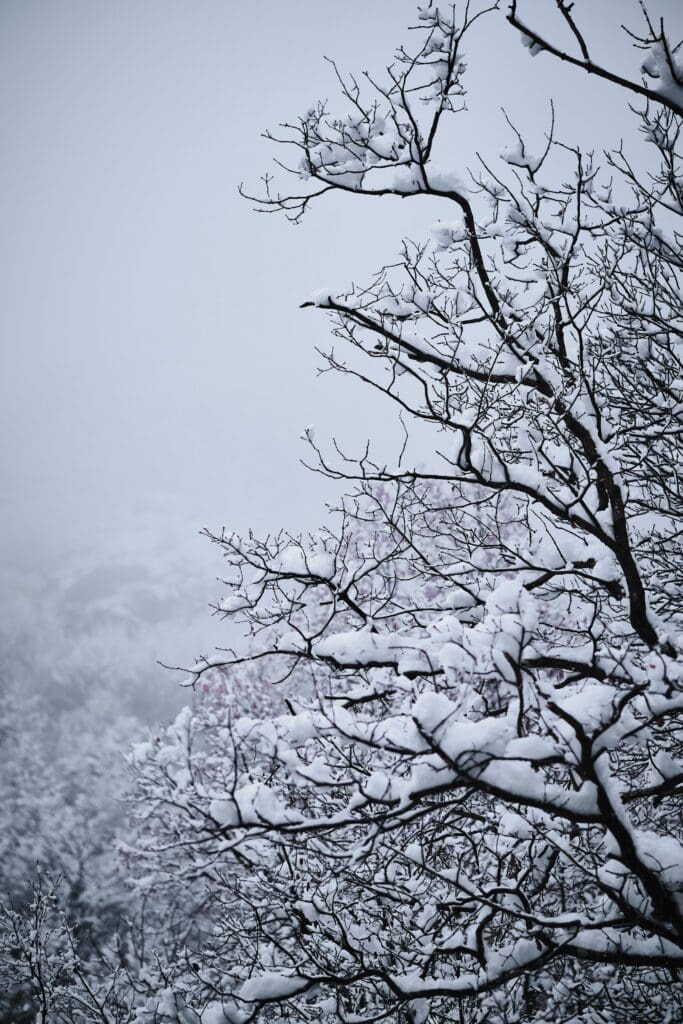
This is the season for hibernating indoors, conserving energy, and choosing gentler, more passive pursuits. In the natural world, animals retreat, plants die back, and the earth itself rests beneath frost and snow. While bad weather can naturally force us to slow down, this slowing is often accompanied by a feeling of guilt, a sense that we “should be doing more,” that rest must be earned or justified. In truth, the opposite is true. Winter is not the season for pushing forward at full speed; it is the season for restoring what has been depleted.
Winter invites us into quieter hobbies and practices that can be done indoors and at a slower pace: board games by candlelight, painting or drawing without an agenda, knitting or mending, baking nourishing food, reading novels, or learning something new simply for the joy of it. And yet, this does not mean complete isolation. Time outdoors, even in short bursts, remains essential. Fresh air, natural light, and contact with the natural world help regulate our nervous system and remind us that we are still part of the larger cycle, even in the depths of winter.
The main focus of winter is rest and inner work. Deep rest that goes beyond sleep, rest that allows the nervous system to downshift, and self-care that is not performative or productivity-driven. This is rest without guilt, without the pressure to justify it. Winter offers us the chance to luxuriate in nurturing our mind, body, and soul, to refill the well of creativity and inspiration that may have been drained over the course of the year.
Winter is also the season of shadows and darkness. In the absence of constant external stimulation, what lies beneath the surface has space to rise. Emotions that were postponed, experiences that were never fully processed, and subconscious patterns all come forward asking to be witnessed. This is a powerful time for journaling, therapy, dream work, meditation, or simply sitting quietly with your feelings. Not to fix or change them, but to understand and integrate them.
The focus of this season is the inner world. The health of your mind, your emotional landscape, your creativity, and your sense of meaning all take centre stage. Winter feeds the unseen roots of your life, preparing you to return to your work, relationships, and passions with renewed clarity and vigour when the light begins to return.
It is also a season that gives you explicit permission to do nothing. To be bored. To feel restless. To sit in the discomfort of slowness without trying to fill every moment. If you feel agitated or unsettled during winter, it is often because you are brushing up against deeply ingrained conditioning that equates worth with productivity. Winter gently, and sometimes not so gently, asks you to let that go.
Learn to accept this season for what it is.
The darkness of winter is not empty or barren. It is nature’s nurturing embrace, the germination of a seed beneath the soil, the gestation period before new life emerges into the light of spring. It is a time when nothing appears to be happening, yet everything is quietly preparing.
Winter enables you to rebuild and restore depleted energy and resources. It offers space to process the year that has passed, to take stock, and to reflect honestly on what worked and what didn’t. What nourished you? What drained you? What patterns do you want to carry forward, and which ones are ready to be released? This reflective quality makes winter a potent time for intention-setting, not from a place of pressure or resolution, but from deep self-awareness.
Living in alignment with winter does not mean withdrawing completely from life. It means adjusting expectations, softening timelines, and choosing quality over quantity. It means allowing your body to move more slowly, your mind to wander, and your emotions to surface without judgment. It means trusting that rest is not a detour from your path, but an essential part of it.
When we honour winter’s energetics, we learn that rest is productive in its own way. That stillness holds wisdom. That emptiness is not something to be filled, but something to be trusted. And that by surrendering to this season, we set the foundation for a more sustainable, creative, and aligned year ahead.
WANT TO LEARN MORE ABOUT SEASONAL PRODUCTIVITY?
If you would like to dive deeper into seasonal productivity and a cyclical approach to life and work, you can join Seasonal Soul, my membership and a guide to living and planning in rhythm with the natural world. You can also pair it with the accompanying Aligned Life Planner.
Together, these resources offer gentle, seasonal guidance for health, creativity, and productivity, along with a supportive framework to help you stay aligned with your natural rhythms throughout the year. They encourage eating seasonally, staying mindful and connected, and building a life that honours both your energy and the cycles of nature — not just in winter, but in every season that follows.
xo Emily

...then live in it
The membership where Lifestyle Planning Meets Wellness + Nervous System Support
SEASONal SOUL inner circle
BUILD
YOUR SEASONAL WORLD
Your ongoing space for living in rhythm with the seasons, cycles and energy of now. Seasonal Soul Membership is designed to help you **embody your seasonal rhythm**, rather than simply learn about it.
Be the first to comment