
Why So Many of Us Are Feeling a Nervous System Pull Toward Slower Living
June 13, 2026
And What the craving for Analogue is really all about
There is a quiet, collective longing moving through so many of us right now.
You can feel it… see it even. in the way so many of us are stepping back from constant notifications, choosing pen and paper over screens, cutting back on screen time and returning to handmade, thoughtful, intentional, choosing things that they can touch physically…. and the current trend of returning to all things ‘analogue’.
This return to all things analogue isn’t just a trend. It’s almost instinctual. And it’s happening on a surprisingly wide scale. This longing isn’t about aesthetics, nostalgia, or rejecting modern life altogether. It’s about something far more fundamental.
In terms of how we live our lives I see analogue as a way of meeting our needs that is slow, tangible, embodied, and human-scaled, rather than instant, automated, optimised, or digitally mediated.
It’s consumption that happens through the senses and the body, not through endless scrolling, algorithms, or frictionless convenience.
And it’s a choice that makes more sense for our nervous system.
At a surface level, the craving for analogue can look like a desire to slow down. Fewer notifications. Less screen time. More intentional choices. But beneath that, something deeper is at play. It’s a choice, a way of living to meet human needs in a way that is slow, tangible, embodied, and human-scaled, rather than instant, automated, optimised, or digitally mediated.
This kind of engagement happens through the senses and the body, not through endless scrolling, algorithms, or frictionless convenience. And that distinction matters.
Because the human nervous system was never designed to process life at the speed modern systems demand. It evolved in environments shaped by light and dark, effort and rest, hunger and nourishment, connection and pause.
Analogue living aligns with those innate rhythms. Digital hyper-consumption does not.
And the body knows this, even when the mind has been trained to override it.
Analogue as a Nervous System Response
This longing isn’t really about technology. It’s about disconnection.
Modern life has slowly pulled us away from the rhythms that once held us. From the natural pacing of the seasons. From the cues of our own bodies. From the subtle intelligence of rest, pause, and change.
We wake to alarms instead of light.
We work to clocks instead of energy.
We measure worth by output rather than wellbeing.
And over time, something essential gets lost.
Not all at once.
It’s worse than that… it’s a gradual seeping away until one day you suddenly realise…
You don’t hear your internal voice, your intuition like you used to
You have lost your joy, whimsy, creative voice
Somewhere along the way, you stop trusting your own timing.
Stopped listening to fatigue until it became burnout.
Stopped noticing when a chapter was ending — or beginning.
Your body keeps trying to communicate, of course. Through tiredness, tension, emotional overwhelm, lack of motivation, brain fog. But we’ve been taught to override all those signals. To push through. To be consistent at all costs. Successful people don’t get tired or slow down
*excuse me while I eye roll here, because these were definitely my beliefs 10+ years ago, and I see this pattern happing on a huge, collective scale now.
This creates a state of chronic activation. Not acute stress — but low-grade, ongoing overwhelm that slowly becomes normalised.
Over time, this kind of environment erodes the nervous system’s capacity to self-regulate. It fragments attention. It disconnects people from bodily cues. It creates a sense of urgency without direction, stimulation without satisfaction, and abundance without fulfilment.
Analogue ways of consuming and engaging with life do the opposite.
They slow things down.
They introduce natural pauses and endings.
They restore agency, choice, and containment.
When something requires time, effort, presence, or participation, it lands differently in the psyche. It feels meaningful. Integrated. Complete.
So when people say they’re craving a simpler life, what they’re often really longing for is rhythm.
A way of living that feels paced rather than pressured.
A sense of time that moves in cycles, not straight lines.
A relationship with life that feels embodied rather than abstract.
This is why analogue feels regulating rather than draining. It brings the nervous system out of constant alertness and back into the body.
The collective longing for “analogue” isn’t nostalgia for the past — I see it very clearly as a nervous system response.
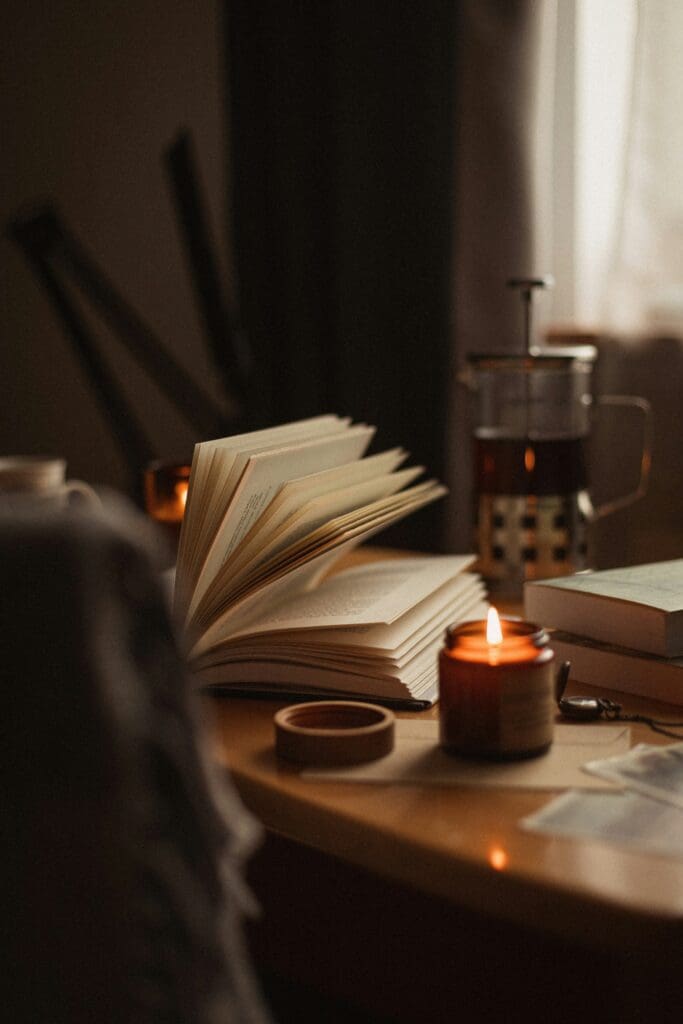
What Analogue Actually Looks Like in Practice
In everyday life, analogue consumption often shows up as small, seemingly ordinary choices:
Choosing physical over virtual
Presence over speed
Quality over quantity
Relationship over transaction
Rhythm over urgency
It’s food that’s cooked and eaten slowly.
Clothes that are worn, mended, and lived in.
Books that are held, not skimmed.
Music listened to without multitasking.
Shopping that involves conversation, texture, and choice rather than one-click extraction.
These experiences may appear inefficient by modern standards. But from a nervous system perspective, they are deeply efficient, working to reduce cognitive load, anchor attention, and create a felt sense of participation rather than passive consumption.
And most importantly, they restore the experience of being here.
When something takes time, effort, or presence, it lands differently in the psyche. It feels earned, meaningful, and complete.
This is why the trend to return to analogue feels so compelling. It slows the nervous system. It brings us back into the body. It reconnects us with something steady and real. In fact this is one trend I can get behind!
And underneath it all, a deeper remembering:
That we were never meant to live at one speed, in one mode, all year round.
This is why minimalism alone doesn’t satisfy. Nor does aesthetic slowness that still operates within systems of urgency and output.
What’s being sought isn’t less — it’s alignment.
The craving for analogue reflects a desire to live in a way that the nervous system can actually keep up with.
Seasonal Living: The Missing Framework
This is where seasonal living becomes essential.
Seasonal living offers a structure that honours change, fluctuation, and natural variation — rather than demanding consistency and performance at all costs.
In a seasonal framework:
Energy is not expected to be constant
Rest is not something to earn
Endings are acknowledged
Beginnings are given space
Periods of outward growth are balanced with inward consolidation
Seasonal living mirrors the natural intelligence of the body and nervous system. It creates containment. It provides rhythm. It allows life to be met in phases rather than forced into a single mode year-round.
Analogue living fits naturally within this framework because both are rooted in the same principle: humans are cyclical beings.
When people say they want to return to analogue living, they are really longing for:
– containment instead of infinite options
– depth instead of constant novelty
– belonging instead of passive consumption
– trust in their own senses instead of external validation
– a pace their body can keep up with
It’s not about rejecting technology entirely. It’s about re-centering the human.
Analogue consumption is a way of restoring the feeling. The presence and the intention. That life is something you participate in, not something that happens to you while you watch. But in truth this is just a mirror of what seasonal living also offers; just with more depth and meaning.
In essence, Analogue consumption is a return to
time you can feel
choices you can stand behind
desires that have roots
and a life that moves at the speed of being alive
It’s not really a trend. It’s a recalibration.
A global nervous system reset that this world so desperately needs….A return to a more seasonal, cyclical and nervous system way of living that’s sustainable!
And it’s not just in how we consume that this change needs to happen.
That nervous system stability and presence can only last and stay sustainable when you have the systems, habits, and tools to back it up. That’s where seasonal rhythm and aligned planning comes in….
This is the system and process I teach in Seasonal Soul.
Time you can feel Choices you can stand behind Desires with roots And a life that moves at the speed of being alive
Why Systems Matter
But this shift cannot be sustained through intention alone. True Nervous system regulation requires structure and support. A way to expand and contract.
Without systems, habits, and rhythms to back it up, even the most sincere desire for slower living eventually collapses under the weight of modern demands.
This is why seasonal rhythm and aligned planning matter so deeply. They turn a longing into a lived reality.
An Invitation to Live This, Not Just Think About It
This is the work at the heart of Seasonal Soul.
Not as a trend or an aesthetic.But a practical, embodied way of living that supports the nervous system, honours cyclical energy, and brings analogue values into daily life.
Seasonal Soul is a membership designed to guide people in creating a life that feels paced, present, and sustainable — one season at a time. A space for those who feel the pull toward slower mornings, deeper presence, and a way of planning that supports rather than drains.
Created for those who want to respond to this collective longing slowly, honestly, and in their own time.
Seasonal Soul will be opening soon. If you feel that pull, you’re invited to sign up and join me there
CHECK OUT THE SEASONAL SOUL SUBSCRIPTION >>
This isn’t about opting out of life.
It’s about coming back into it, reconnecting fully, rhythmically, and on human terms.
xo Emily

...then live in it
The membership where Lifestyle Planning Meets Wellness + Nervous System Support
SEASONal SOUL inner circle
BUILD
YOUR SEASONAL WORLD
Your ongoing space for living in rhythm with the seasons, cycles and energy of now. Seasonal Soul Membership is designed to help you **embody your seasonal rhythm**, rather than simply learn about it.
Be the first to comment