
What Seasonal Living Has Done For My Health and My Life
April 23, 2026
Seasonal living wasn’t something I set out to achieve, or even consciously wanted. It wasn’t a lifestyle choice I pinned to a vision board or a philosophy I adopted overnight. It was something that grew organically, quietly, and almost accidentally over time—after I realised its benefits not through theory, but through survival.
Let me explain.
For decades, I lived the way I thought I was supposed to. I punched myself forward through life with sheer willpower. Work hard. Be productive. Get good grades. Prove yourself. Get the high-flying job. Keep going. Don’t slow down. Don’t rest unless you’ve earned it. Don’t fall behind. Don’t be weak.
I wore busyness like a badge of honour. I internalised the belief that my worth was directly tied to how much I could do, how much I could carry, how much I could push through. Even when my body whispered that something wasn’t right, I ignored it. Even when exhaustion became my baseline, I told myself everyone felt like this. Even when rest felt necessary, it also felt shameful.
Until my body rebelled.
My nervous system said no more.
Just after my 31st birthday, I was diagnosed with ME/CFS—chronic fatigue syndrome—alongside fibromyalgia and a whole constellation of other symptoms, all deeply connected to nervous system dysregulation. Pain, exhaustion that sleep didn’t touch, brain fog, sensory overwhelm, emotional volatility, a body that no longer felt safe or predictable.
What came after that diagnosis was a rock bottom I wouldn’t wish on anyone.
I lost more than my health. I lost my identity. The version of me who could push through, keep up, prove herself—she disappeared overnight. The life I had built no longer fit the body I lived in. I could no longer do all the things that had brought me happiness. I didn’t recognise myself. I didn’t trust my body. And I didn’t know how to exist in a world that kept moving at a pace my body could no longer tolerate.
It felt like the world was moving on without me.
There were days when getting dressed felt like a victory. Days when leaving the house felt impossible. Days when my world shrank to the size of my sofa, my bed, the view from a single window. The grief was immense—not just for the life I had lost, but for the future I had imagined and no longer knew how to reach.
And in those lowest moments, when I no longer knew who I was anymore, nature was one of the only things that brought me any joy.
I clung to it like a life raft.
Not in grand, cinematic ways. Not through dramatic hikes or big adventures. But through tiny, mundane moments that most people rush past without noticing.
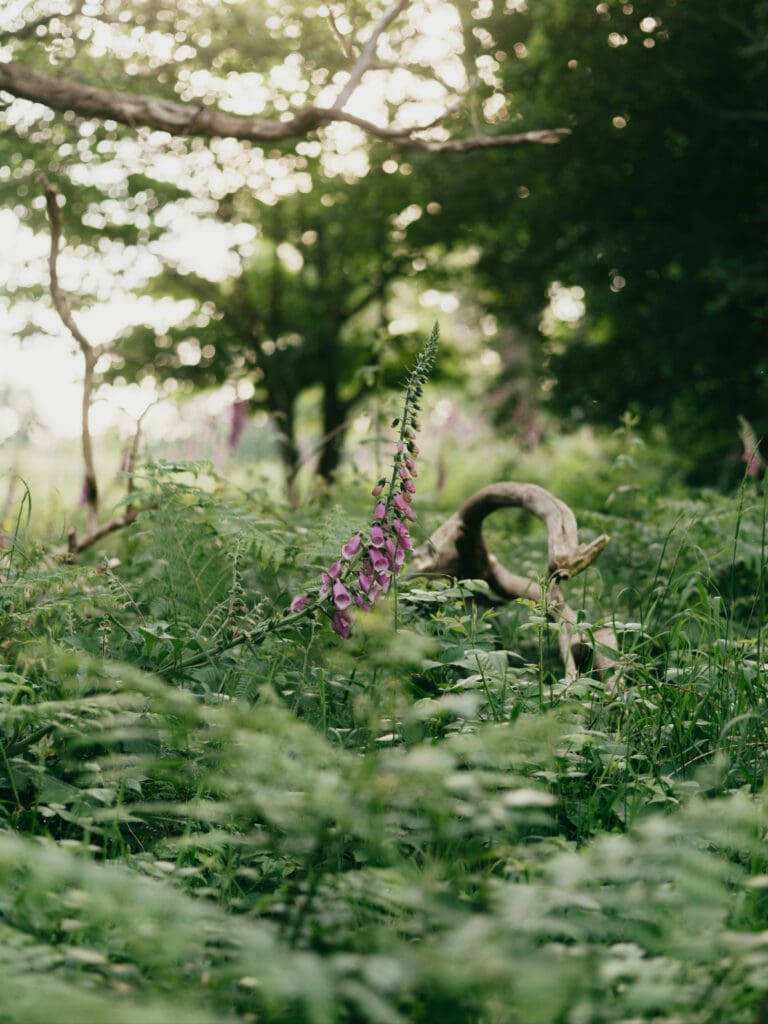
Spotting a ladybird in the grass.
Watching bees lazily move from flower to flower.
Noticing the first new blooms after winter.
Listening to birdsong drift through an open window.
Watching red kites circle the sky.
Feeling the sound of the wind moving through the trees.
These moments mattered. They became infinitely precious because they lifted my spirits and made me smile when so little else could. They asked nothing of me. They didn’t require productivity, achievement, or explanation. They simply existed. And in their existence, they offered me permission to exist too.
Nature didn’t need me to be better. Or faster. Or healed. It met me exactly where I was.
From those simple moments, I began to feel a quiet pull toward something deeper.
I don’t know now if it was all connected or coincidence (although I don’t believe in coincidences) but after being let down by Dr after Dr, I began exploring holistic and alternative medicine—l conventional medicine could no longer help me, but I refused to give up — I began searching for ways to help myself, one symptom at a time.
I started learning about herbal remedies. Learning which plants supported the nervous system, which soothed inflammation, which gently held the body through exhaustion and grief. I learned how to identify them, how to work with them, how to listen to their rhythms instead of trying to dominate them.
And from there, things grew.
As my understanding of the herbal world expanded, I began to see how everything was connected. How plants didn’t operate in isolation, but in cycles. How they grew, rested, flowered, seeded, and died back in perfect timing. How they responded to light and dark, warmth and cold, abundance and scarcity.
I couldn’t unsee it.
And slowly, almost without realising, I began to mirror it.
Seasonal living didn’t arrive as a concept. It arrived as a necessity. My body could no longer live in a perpetual state of summer—of output, brightness, and endless doing. I needed winter. I needed rest. I needed slowness. I needed cycles.
Where slowing down had felt like giving up, my health left me no other option, and the seasons gave that slowness meaning.
Over time, as I connected with the seasons and the natural world on this deeper level, I began to see how it connected to Astrology and the moon too.
It was allll connected.
Seasonal living taught me, gently and relentlessly, that rest is not a reward—it is a requirement. That energy is not infinite. That pushing through has consequences. That healing is not linear, and neither is life.
I began to notice how my body responded differently at different times of year. How winter asked me to sleep more, socialise less, and turn inward. How spring brought flickers of hope and energy, but also fragility. How summer expanded my capacity, but also tempted me to overdo it. How autumn invited reflection, release, and gentle recalibration.
Instead of fighting these shifts, I started honouring them.
This was revolutionary for my nervous system.
Living seasonally helped me step out of constant survival mode. It softened the rigid expectations I placed on myself. It allowed me to plan my life around my energy instead of forcing my energy to fit my life. It taught me to pace myself—not just physically, but emotionally and mentally too.
For someone with ME/CFS and fibromyalgia, this was everything.
My symptoms didn’t disappear overnight. Seasonal living wasn’t a miracle cure. But it created the conditions for healing. It reduced flare-ups by reducing pressure. It supported my nervous system by offering predictability and safety. It helped me recognise early signs of burnout instead of ignoring them until my body shut me down.
Perhaps most importantly, it changed my relationship with myself.
I stopped seeing my body as the enemy. I stopped treating it like a faulty machine that needed fixing. I began to see it as an intelligent ecosystem, responding to stress, trauma, environment, and unmet needs. Seasonal living gave me a language of compassion instead of criticism.
On a practical level, my days became simpler. My routines gentler. My expectations more realistic.
What I struggled with as my health returned was conxxx this new way of living with the old, linear way of planning I was used to.
At first, this felt confronting. The culture I had been raised in doesn’t honour seasons within the body. It expects consistency. Linear progress. The same output, day after day, month after month, regardless of what is happening internally or externally.
I struggled to keep listening to my body and honouring this new way of being, whilst also feeling like
Then I had an epiphany.
I began planning work and creative output around seasons rather than forcing consistency year-round. I allowed quieter months to be quieter. I let rest be visible, intentional, and unapologetic.
It worked!
On a deeper level, something else was happening.
Seasonal living gave me back my sense of meaning.
When chronic illness strips away productivity, titles, and external validation, you’re left face to face with who you are beneath it all. Nature became my teacher in that space. It reminded me that worth is inherent. That cycles of rest and dormancy are not failures—they are essential phases of life.
Watching trees shed their leaves taught me about letting go. Watching seeds lie dormant taught me about patience. Watching life return each spring taught me about trust.
My mental health shifted alongside my physical health. Anxiety softened as I learned to move with time instead of against it. Depression loosened its grip as I found beauty in the smallest moments again. My nervous system began to recognise safety not through control, but through rhythm.
Seasonal living also reshaped how I related to time. I stopped seeing it as something to race against or conquer. Time became something to inhabit. To move with. To listen to.
There is something deeply regulating about knowing that nothing is meant to stay the same. That exhaustion is not permanent. That energy will return in its own time. That winter always gives way to spring, but only if you allow it to be winter first.
This perspective changed how I approached healing. I stopped demanding constant improvement. I stopped measuring success by symptom-free days. I began honouring small wins—moments of ease, moments of connection, moments of presence.
Health, for me now, is not the absence of illness. It is the presence of attunement.
Seasonal living helped me rebuild a life that fits my body instead of breaking myself to fit a life. It gave me permission to be cyclical in a world obsessed with linearity. It taught me that slowness is not stagnation. That rest is productive in ways our culture doesn’t measure. That sensitivity is not weakness—it is information.
I am healthier now not because I fixed myself, but because I learned to listen.
I live in deeper relationship with my nervous system. I understand my limits and respect them. I notice when I’m pushing too hard. I rest before collapse instead of after. I choose nourishment over depletion, again and again.
Seasonal living didn’t just support my physical health—it re-rooted me in myself.
It gave me a way to belong to my body again. To trust it. To move with its wisdom instead of overriding it. It helped me grieve who I was, and gently become someone new.
Someone slower. Softer. More present.
Someone who notices ladybirds in the grass and lets that be enough for today.
And the journey isn’t over yet!
Every year, every cycle of living this way shows me something new. Takes me to a deeper level of knowledge, understanding and evolution.
xo Emily

...then live in it
The membership where Lifestyle Planning Meets Wellness + Nervous System Support
SEASONal SOUL inner circle
BUILD
YOUR SEASONAL WORLD
Your ongoing space for living in rhythm with the seasons, cycles and energy of now. Seasonal Soul Membership is designed to help you **embody your seasonal rhythm**, rather than simply learn about it.
Be the first to comment